Step 3
Short sentences (Korte sætninger)
Now the words go together. The sentences are three to five words long.
Set 1 The cat and the mouse
The words
The text
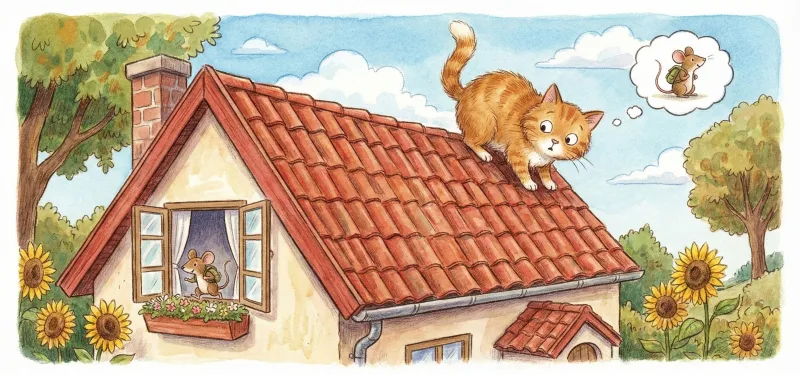
Se kat.Kat på hus.Se mus.Mus i hus.Kat se mus.Hop, mus!
Talk about the text
- Where is the cat?Hvor er katten henne?
- Why do you think the mouse has to jump?Hvorfor tror du, musen skal hoppe?
- Have you seen a cat looking for something? What happened?Har du set en kat, der kiggede efter noget? Hvad skete der?
For the adult: The story is about a cat that sees a mouse. Read it twice if you can: the first time to get the words right, the second time to make it sound like a text that hangs together.
Set 2 Mum and the car
The words
The text
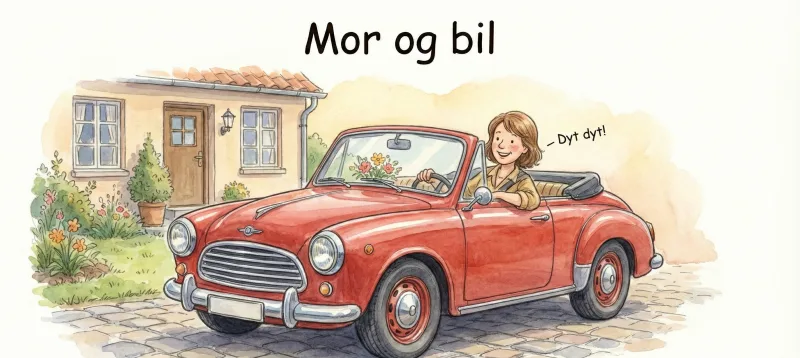
Se mor.Mor har bil.Bil er fin.Mor er i bil.Dyt dyt!Mor vil på tur.
Talk about the text
- What does mum have?Hvad har mor?
- Where do you think mum is going?Hvor tror du, mor skal hen?
- Where do you go when you go on a trip?Hvor kører I hen, når I skal på tur?
For the adult: Point at the word while your child reads. Many children lose the line when they have to concentrate on the letters, and a finger under the word shows them all the time how far they have got.
Set 3 Dad gets his tea
The words
The text
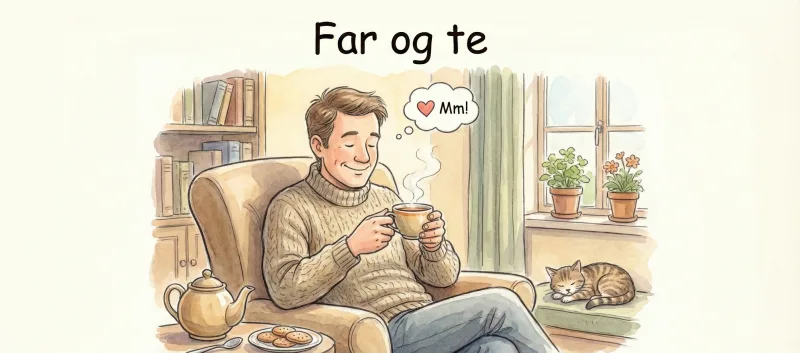
Se far.Far er i hus.Far vil ha te.Se kop.Te i kop.Mm! Te er go.
Talk about the text
- What is in the cup?Hvad er der i koppen?
- How do you think the tea tastes when dad says mm?Hvordan tror du, teen smager, når far siger mm?
- What do you drink at home when you are having a cosy time?Hvad drikker I derhjemme, når I hygger?
For the adult: The text says ha and go, not have and god. The words are written the way they sound, so your child can sound their way to all of them. Do not correct it while your child is reading. Say the ordinary form afterwards, once the text has been read.
Set 4 Lis and the fish
The words
The text
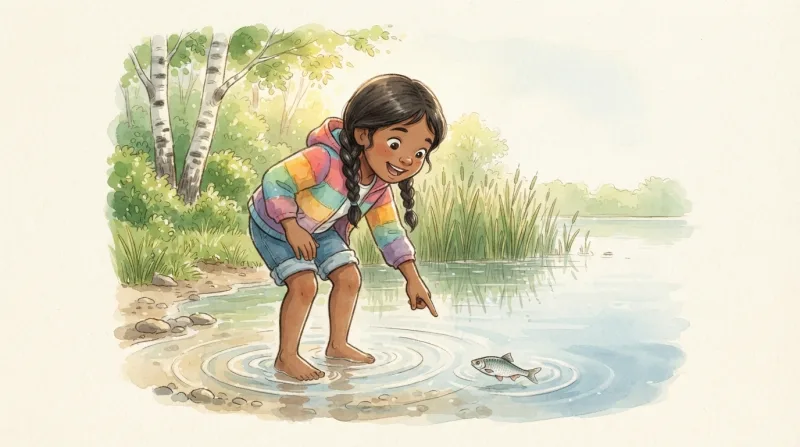
Se en sø.Lis er i sø.Se, en fisk!Fisk er fin.Fisk er væk.Lis vil ha en fisk!
Talk about the text
- What does Lis see in the lake?Hvad ser Lis i søen?
- Why do you think the fish swims away?Hvorfor tror du, fisken svømmer væk?
- Which animal would you like to have?Hvilket dyr vil du gerne have?
For the adult: Every word in the text is spelled the way it sounds. Let your child point at each letter and say the sound before blending them into a word. If it stalls, say only the first sound.
Set 5 Ida wants an ice cream
The words
The text
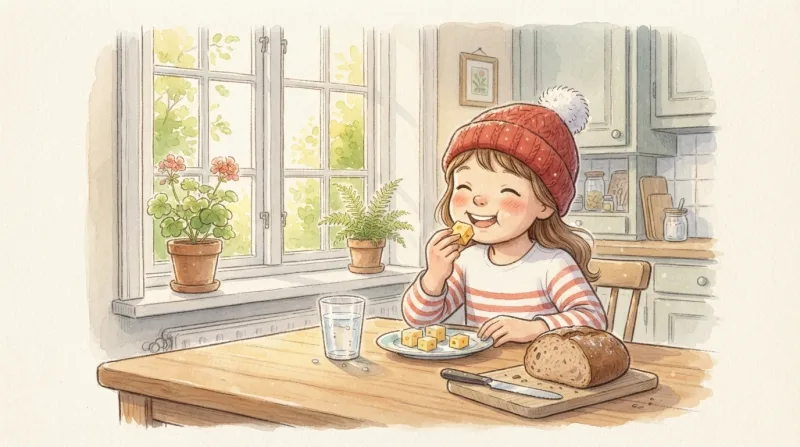
Se Ida.Ida er sur.Ida vil ha is.Mor har ost.Ost er go.Nu er Ida mæt.
Talk about the text
- What does Ida want?Hvad vil Ida have?
- Why is Ida no longer cross at the end?Hvorfor er Ida ikke sur til sidst?
- What do you eat when you are hungry?Hvad spiser du, når du er sulten?
For the adult: The text says ha and go, not have and god. The words are written the way they sound, so your child can sound their way to all of them. Do not correct it while your child is reading.
Set 6 The bee wants the ice cream
The words
The text
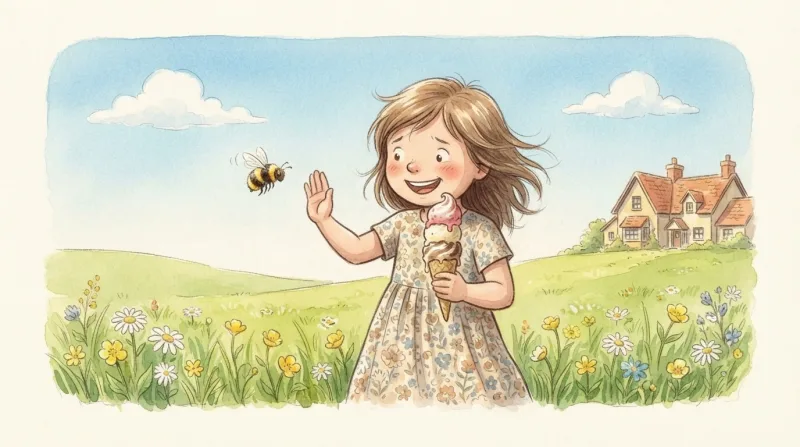
Se sol.Sol er fin.Mona har en is.En bi kom.Bi vil ha is.Væk, bi!
Talk about the text
- What does Mona have?Hvad har Mona?
- Why does the bee go for the ice cream?Hvorfor vil bien hen til isen?
- What do you do if a bee comes too close?Hvad gør du, hvis en bi kommer for tæt på?
For the adult: The last line is a shout. Read it the way Mona would say it, and let your child try afterwards. Hearing that the punctuation means something helps the reading.
Set 7 Mik wants the car
The words
The text
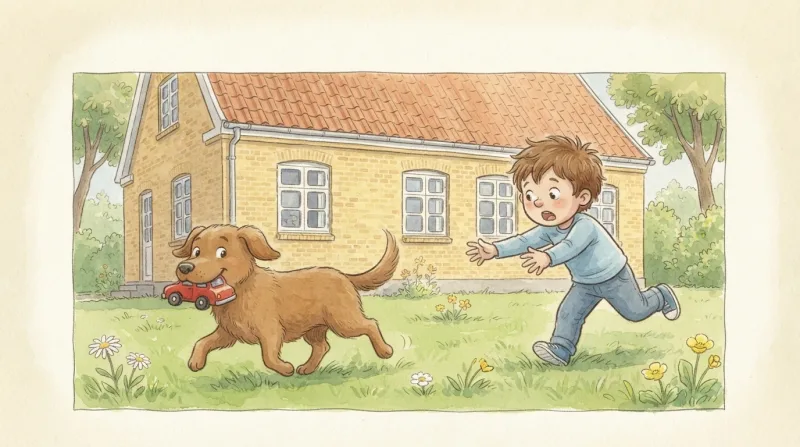
Se Tim.Tim har en bil.Mik vil ha bil.Mik løb.Tim løb.Nu har Tim bil.
Talk about the text
- Who wants the car?Hvem vil have bilen?
- Why does Tim run?Hvorfor løber Tim?
- Has anyone taken something you were playing with?Har nogen taget noget, du legede med?
For the adult: Mik is the dog from step 4. Five of the six sentences are three or four words long. Read it twice if you can: the first time to get the words right, the second time to make it sound like a story.
Set 8 The cat wants cheese
The words
The text
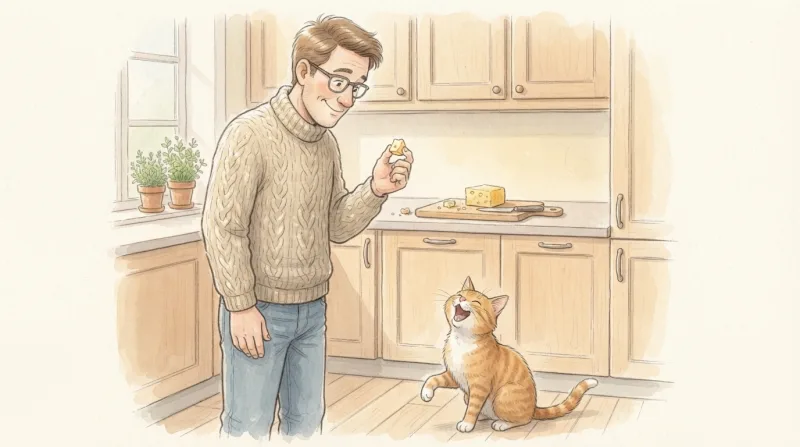
Se far.Far har ost.Kat ser på far.Kat vil ha ost.Kat fik ost.Nu er kat mæt.
Talk about the text
- What does dad have?Hvad har far?
- Why is the cat looking at dad?Hvorfor kigger katten på far?
- Do you know an animal that begs for food?Kender du et dyr, der tigger om mad?
For the adult: The word kat, cat, is in four of the six lines. That is deliberate: once your child has sounded it out a couple of times it gets recognised instead, and then there is room to spare for the rest of the sentence.
Set 9 Mia goes running
The words
The text
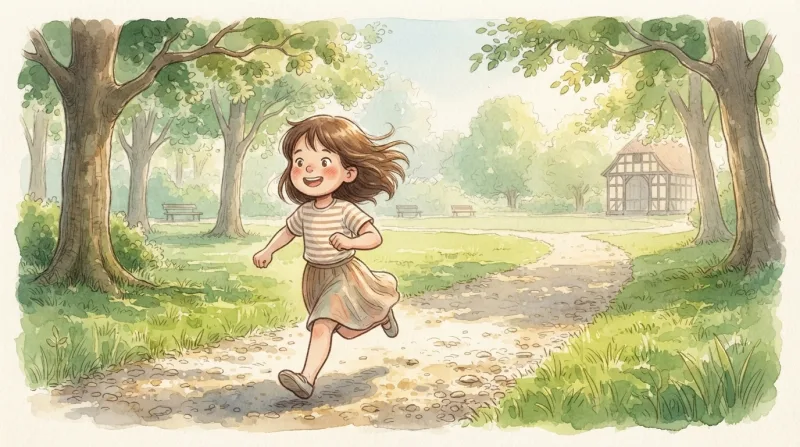
Se Mia.Sol er fin.Mia løb.Mia løb i sol.Nu er Mia træt.Men Mia vil mer!
Talk about the text
- What does Mia do in the sun?Hvad gør Mia i solen?
- Why is Mia tired?Hvorfor er Mia træt?
- What makes you tired?Hvad bliver du træt af at lave?
For the adult: The text says mer, not mere. The word is written the way it sounds, like ha and go in the other sets. The last two lines have men, but, between them: tired and ready for more at the same time.
Exercises for this step
The exercises have their own page. These ones suit what your child is practising on this step.
Is this the right step?
If your child reads most of the words without sounding them out, the step is too easy. If your child gets stuck on more than a few, go one step down. That is not a defeat, it is the fastest way forward.
Borrow books that match: show this text to the librarian, and they can find books at the same level. See library.